
Care that looks ahead. Analyzing the genetic makeup of each embryo, before transfer.
Preimplantation Genetic Testing (PGT) refers to the technique used as part of an in vitro fertilization (IVF) cycle to analyze the genetic makeup of the embryos prior to their transfer into the uterine cavity.
There are three subtypes of PGT, each addressing a different question about the embryo’s genetic profile.

PGT-A (Preimplantation Genetic Testing for Aneuploidies), formerly known as PGS, is used to detect abnormalities in the number of chromosomes in the embryos. PGT-A allows to screen for chromosomal aneuploidy that can cause disorders such as Down syndrome (trisomy 21), Turner syndrome (45, XO), and Klinefelter syndrome (47, XXXY). It also allows to screen for partial aneuploidies, unbalanced translocations, and polyploidies.
Following PGT-A, only the best euploid embryos are transferred, theoretically decreasing the risk of miscarriage and increasing the pregnancy and live birth rates.
PGT-M (Preimplantation Genetic Testing for Monogenic disorders), formerly known as PGD, is used to detect single mutations in the embryos. These single gene mutations can cause several types of hereditary diseases that can be autosomal dominant (such as Huntington disease), autosomal recessive (such as cystic fibrosis), or X-linked (such as Hemophilia or Fragile X syndrome).
PGT-SR (Preimplantation Genetic Testing for Structural Rearrangements) is used to detect abnormalities in the size or arrangement of chromosomes in the embryos. There are several types of structural rearrangements that can be balanced or unbalanced, such as translocations, inversions, deletions, and duplications.
PGT is performed as part of an IVF/ICSI cycle, and therefore includes the following steps:
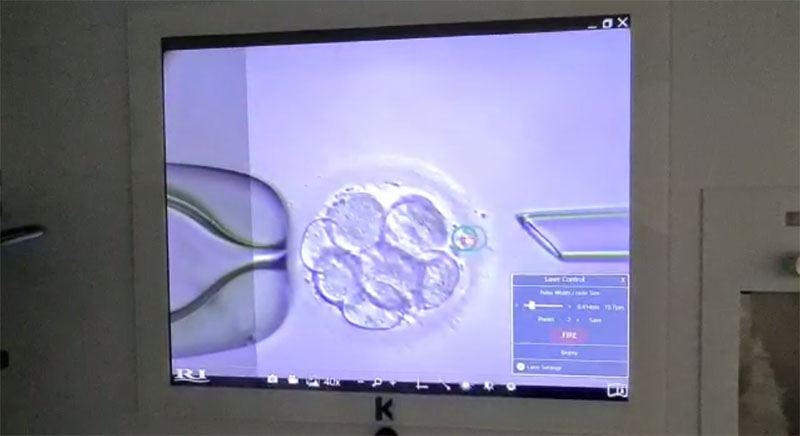
A laser is used to create an opening in the outer shell of the embryo, and a small number of cells are taken for genetic analysis. The embryos are then cryopreserved while the results of the genetic analysis are awaited. Once the results are available, the best chromosomally normal embryos are selected for transfer in a subsequent cycle.
When you are ready to explore your options, we are here for you. Our fertility experts will help craft a personalized plan based on your needs.
We will get back to you within 24 hours.