Your future, safely preserved. Eggs, ovarian tissue, and sperm cells, kept ready for the family you want, when you want.
Fertility Preservation refers to the techniques that allow women to preserve their eggs (oocytes) and men to preserve their sperm cells for future pregnancies.
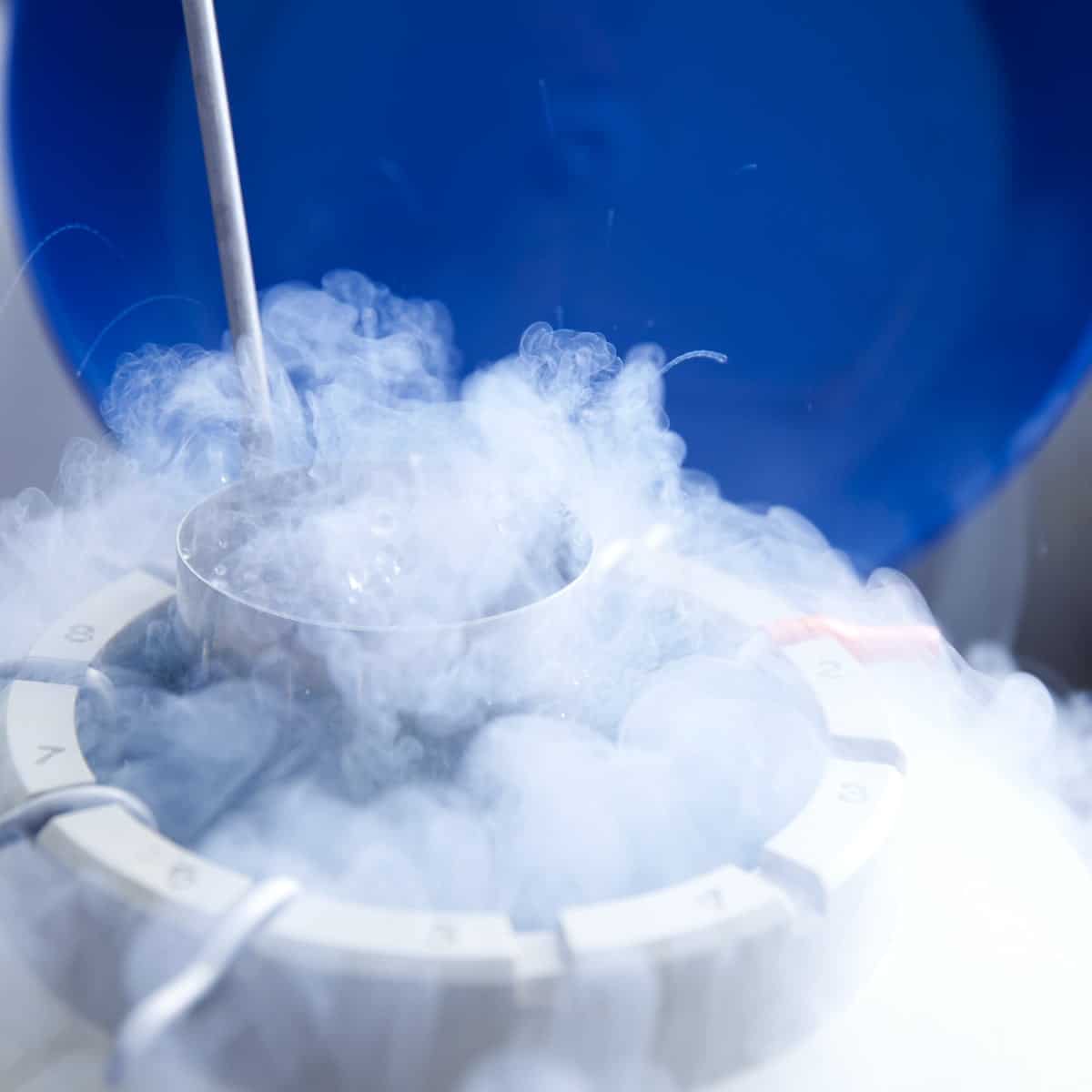
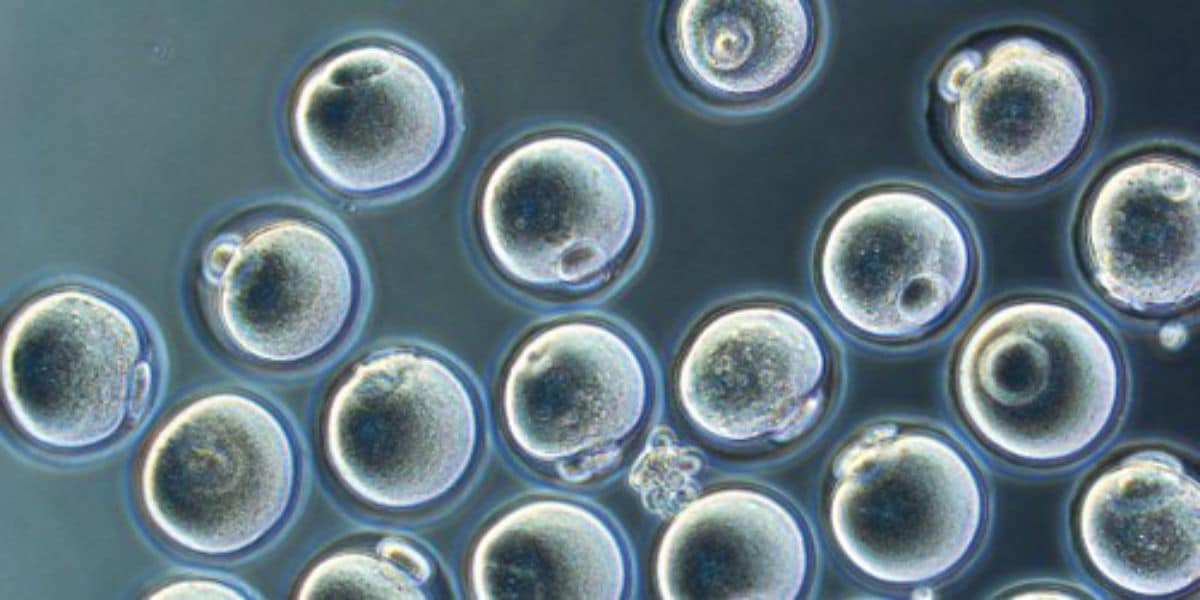
Egg freezing, or oocyte cryopreservation, allows women to postpone motherhood by cryopreserving their mature oocytes. Oocytes are frozen using vitrification, an ultra-rapid freezing method, and stored in liquid nitrogen at -196 °C.
Egg freezing is recommended in two main contexts: medical egg freezing (women at risk of losing their fertility because of an illness or a toxic treatment) and social egg freezing (prevention of age-related fertility decline).
The improvements in cancer treatments, and the efficiency of early screening programs, have significantly improved the survival rates. For instance, breast cancer, the most common cancer in women, has an overall survival rate of 80% or more. Many cancer survivors are still young and want to start or expand their family.
Unfortunately, cancer treatments are highly toxic, and can irreversibly damage a woman’s ovarian reserve, and her ability to conceive. Chemotherapy and pelvic radiation therapy significantly impair the ovarian reserve and can lead to premature ovarian insufficiency.
It is now recommended that any woman of reproductive age diagnosed with cancer should be referred to a Reproductive Specialist as soon as possible, before the start of treatment. The procedure requires 10 to 14 days, and does not impact the condition nor delay the treatment.
When the patient has successfully completed her treatment and it is safe for her to get pregnant, the oocytes are thawed, fertilized with the partner’s sperm using ICSI, and the resulting embryos are transferred back into the uterine cavity, without the need for a hormonal stimulation.
The ovarian reserve declines with age, and so does a woman’s fertility. A woman’s peak fertility years extend from the early twenties till the early thirties, during which many of them are still single, or unable to start their family.
Oocyte cryopreservation allows women to store their oocytes, at a healthy young age, and for an indefinite period of time. If infertility occurs later in life, because of the age-related decline or for other medical reasons, the frozen oocytes can be used to improve the chances of pregnancy.
There is no single ideal age for oocyte cryopreservation, since many factors are taken into consideration when opting for treatment, such as the ovarian reserve, the menstrual history, the personal medical and surgical history, the family medical history, and marital status. The quantity and quality of the available oocytes decrease with age, therefore making social egg freezing more efficient at a younger age.
Oocyte cryopreservation has been proven to be efficient and safe, with thousands of healthy babies born following oocyte vitrification. The success rates vary according to the age of the woman at the time of freezing, and the number of oocytes frozen. Undergoing the procedure does not decrease a woman’s ovarian reserve or advance her menopause.
Oocyte cryopreservation involves the same initial steps as an IVF cycle up until the oocyte retrieval (Controlled Ovarian Stimulation and Oocyte Retrieval). The process requires 10 to 14 days, during which the patient can proceed with her daily activities.
After the retrieval, the oocytes are vitrified and stored in liquid nitrogen, and the patient is discharged home to rest for the remainder of the day. The risks and complications are the same as for IVF; however, the risk of Ovarian Hyperstimulation Syndrome (OHSS) is extremely rare with oocyte cryopreservation, since there is no embryo transfer to perform.
The eggs are placed in special vials that are deposited in tanks containing liquid nitrogen. They are stored at -196 °C, at a temperature where there is no cellular activity, and thus are not affected by the length of storage. The eggs are kept until the patient decides to use them, and can be discarded at any time at her request.
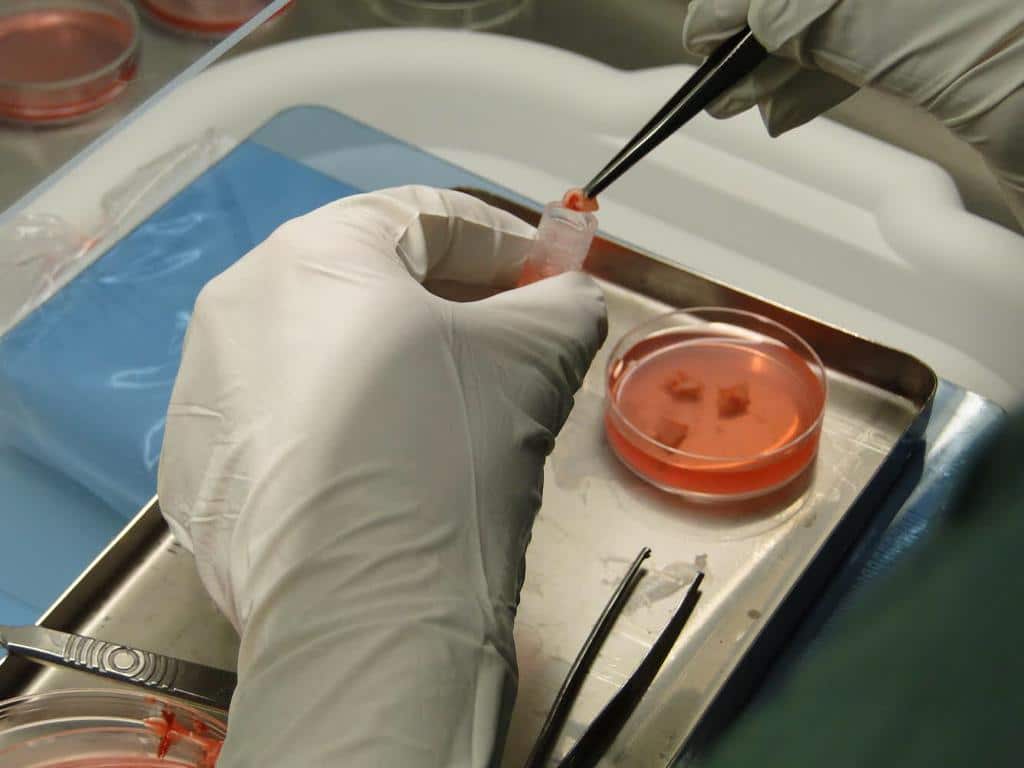
Ovarian tissue cryopreservation involves the removal of a part of the ovary, cryopreserving it, and implanting it back into the pelvis when needed. This technique has led to the birth of hundreds of healthy babies worldwide, but is still considered experimental and is therefore reserved for special cases of infertility.
Tissue harvesting, usually performed by laparoscopy under general anesthesia. One part or the entirety of the ovary is removed, depending on the case and the risk of ovarian insufficiency, and immediately transferred to the IVF laboratory. The patient can start her chemotherapy the day after.
Tissue cryopreservation: in the IVF laboratory, the harvested tissue is placed in a special media, and the cortex is dissected away from the medulla and cut into small fragments to be cryopreserved.
Tissue transplantation: once the patient is disease-free and has the approval of her treating oncologist to get pregnant, the ovarian fragments are transplanted back into the pelvic cavity. The implanted fragments resume their activity in the months following the procedure, and the patient can get pregnant spontaneously or via IVF.

Sperm freezing is the only proven method of fertility preservation in men and adolescents. Mature sperm cells are collected through masturbation and analyzed, before being cryopreserved via vitrification, and stored indefinitely in liquid nitrogen. In order to improve the chances of success, several samples can sometimes be required, especially in men with a decreased sperm count.
Sperm freezing has been shown to be an efficient method of fertility preservation for more than 50 years, with millions of healthy babies born worldwide. The safety of sperm freezing is also proven, with no risk on the health of the offspring. Frozen sperm can be used for an intrauterine insemination, an IVF cycle, or an ICSI cycle.
To date, fertility preservation in prepubertal boys remains challenging, because active spermatogenesis does not start before puberty. Several experimental procedures are offered today, such as immature testicular tissue or spermatogonial stem cell cryopreservation, but these techniques are still under investigation and are only offered as part of a research protocol.
When you are ready to explore your options, we are here for you. Our fertility experts will help craft a personalized plan based on your needs.
We will get back to you within 24 hours.